How to use OCR to make scanned PDFs editable: The PDF files that have been scanned are very prevalent nowadays. They are popular in documenting such papers as contracts, books, invoices, academic notes, and official paperwork. Nonetheless, an issue with scanned PDFs is that they cannot be edited. This occurs as scanned PDFs are not real text files, but are merely images of text.
Tutorial: How to sign PDF documents electronically
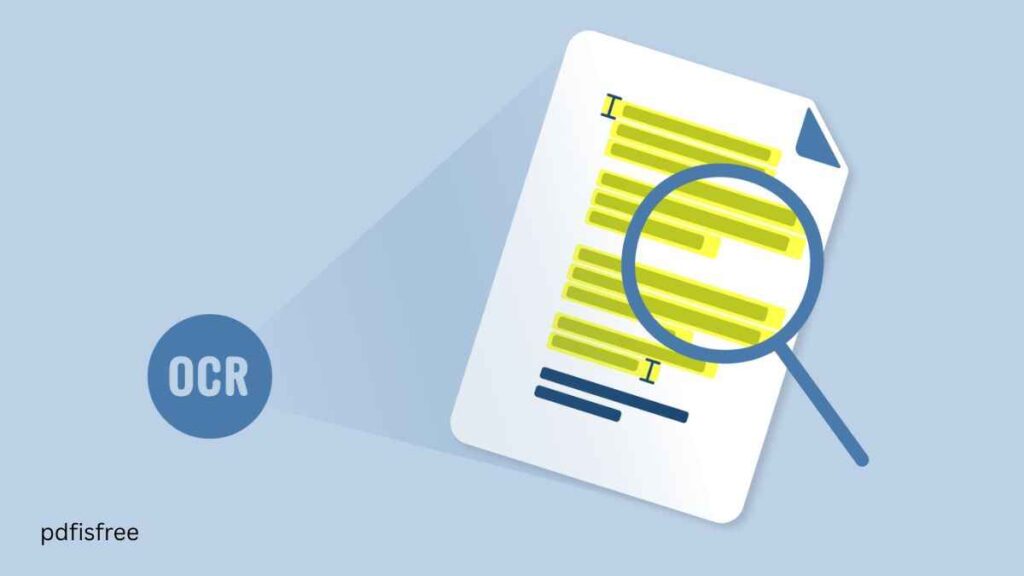
Luckily, one has a mighty technology known as OCR which can resolve this issue. OCR is short as Optical Character Recognition. It enables you to turn scanned files or PDF files into fully editable and searchable text files.
This comprehensive tutorial will explain the meaning of OCR, its functionality, and stepwise procedures of using OCR to convert the scanned PDFs to an editable form.
What Is OCR (Optical Character Recognition)?
OCR is a technology that scans text in images, scanned documents or PDF files and transforms it into machine readable text. It perceives letters, figures, symbols and formatting in such a way that you can make amends with the contents as you would in a normal document.
To give an example, when scanning a printed book page, OCR can turn it into edible text either in Word or PDF format.
Scanned PDFs are not editable because of the following reasons.
Whenever you scan a document with the help of a scanner or a mobile camera, the result is saved as an image in a PDF file. This means:
- Text cannot be selected
- It is not possible to copy and paste.
- Search feature is ineffective.
- Editing is impossible
All these problems are eliminated by using OCR, which converts the text in an image into actual editable text.
Advantages of OCR of PDFs.
There are numerous benefits of using OCR.
1. Makes Documents Editable
The scanned PDF files can be easily edited as Word files.
2. Saves Time
There is no need to repeat typing of large documents.
3. Enables Search Function
It is possible to find words within the document very fast.
4. Improves Productivity
Ideal students, business, and research.
5. Multiple Languages.
Contemporary OCR systems are able to identify numerous languages.
Method 1: Use Adobe Acrobat OCR
One of the most widespread OCR tools is Adobe Acrobat.
To make scanned PDF editable, follow the following steps:
- Read your scanned PDF on Adobe Acrobat.
- Select scan & OCR under the tools menu.
- Select “Recognize Text.”
- Select languages and settings.
- Click “Recognize Text.”
- Once processed, you can edit your PDF.
Advantages:
- High accuracy
- Preserves formatting
- Professional results
Script 2: Free Online OCR Tools.
Online OCR software are fast and simple to work with.
Popular Online OCR Tools:
- Smallpdf OCR
- iLovePDF OCR
- OnlineOCR.net
- PDF2Go
- SodaPDF
Steps:
- Upload your scanned PDF.
- Select output type (Word, Text or PDF).
- Start OCR conversion.
- Download the editable file.
Benefits:
- No installation required
- Works on any device
- Available free basic versions.
Method 3: Use Google Drive OCR
Google Drive has been given a full free OCR facility.
Steps:
- Object uploaded to Google Drive.
- Right-click the file.
- Select “Open With” > Google Docs.
- OCR is automatically used at Google.
- A new document will be editable, with the text.
Best For:
- Simple documents
- Free solution
- Quick conversions
Method 4: OCR with Microsoft OneNote.
OCR is also supported by Microsoft OneNote.
Steps:
- Import scanned PDF documents to OneNote.
- Right-click the image.
- Click on copy text picture.
- Insert the edit text anywhere.
- This is a good way of text mining in images.
Method 5: Use Mobile OCR Apps
OCR can be done by smartphone apps in a short amount of time.
Popular OCR Apps:
- Adobe Scan
- Microsoft Lens
- CamScanner
- Text Fairy
Steps:
- Scan or upload the PDF.
- Tap the OCR feature.
- Export editable text.
This technique can be employed in fast editing in mobile devices.
Tips for Better OCR Results
Use High-Quality Scans
The sharpness of the scans is clear and enhances better recognition.
Choose Correct Language
It is always better to use the appropriate language to achieve better results.
- Avoid Handwritten Text
- OCR is effective with printed text.
- Conversion Check Formatting.
- Some adjustments may be required.
- Problems and Solutions to Common OCR.
- Poor Accuracy
- Higher scans and software are to be used.
- Formatting Errors
- Manual editing of OCR.
- Is Unable to Recognize Handwriting.
- Apply special handwriting OCR software.
- Large File Size Issues
Process the PDF after compressing.
Optimum OCR Process Depending on your requirement.
- Situation
- Best Method
- Professional work
- Adobe Acrobat
- Free solution
- Google Drive
- Quick online conversion
- Online OCR tools
- Mobile scanning
- OCR apps
- Bulk processing
- OCR software
Is OCR Safe to Use?
OCR is not dangerous in general, but online tools are recommended with confidential documents. In the case of sensitive files, protect your data offline with the help of offline software.
Future of OCR Technology
Artificial intelligence is enhancing the rate of OCR technology. The present-day AI-based OCR systems are capable of:
- Recognize handwriting
- Maintain exact formatting
- Convert tables accurately
- Automatic translation of text.
This enhances the OCR to be even more potent in terms of business and academic.
Final Thoughts
With the OCR technology, it has become extremely easy to turn the scanned PDFs into the editable documents. It can be say that regardless of whether you are using Adobe Acrobat, online OCR sources, Google Drive, or mobile applications all of these ways provide an easy method to unlock and edit the scanne text.
Online tools and Google drive are the simplest ones to use, especially by the beginners. Adobe Acrobat is the best in terms of the results require in professional and high-accuracy needs.
With the assistance of this guide, you will be able to convert any scanned PDF into an edible, searchable and usable document within a short period of time which saves time and enhances productivity.